



The Nicolaus Copernicus University in Toruń is the second university in Poland to coordinate the international Erasmus Mundus Joint Master's programme: interCultural Leadership In the Digital Era (CLIDE). This is a distinction and an opportunity to raise education to a new international level.
The CLIDE project began on 1 November. Nicolaus Copernicus University in Toruń signed an agreement with the European Education and Culture Executive Agency (EACEA) worth EUR 3.6 million. The project involves the implementation of a new international master's degree programme in collaboration with the University of Granada (Spain), the University of Applied Sciences Upper Austria (Austria), Simon Kuznets Kharkiv National University of Economics (Ukraine) and Universite Hassan II de Casablanca (Morocco). Preparations for the admission of the first students in the 2026/2027 academic year have already begun during a meeting at Nicolaus Copernicus University.
CLIDE is a strategic project for our University, says Dr Magdalena Barwiołek, Professor at Nicolaus Copernicus University, Vice-Rector for International Relations. ‘We are proud to be its leader. It also shows how strong our university's position is in international education. This is certainly not the last such initiative at NCU. We are already thinking about the next ones.’
International joint studies carried out as part of Erasmus Mundus Joint Master programmes are recognised worldwide. The best students compete for places on the programme, and some of them can count on high scholarships provided by European funds. A hallmark of EMJM programmes is also the compulsory mobility of students, which is why studies take place at several universities.
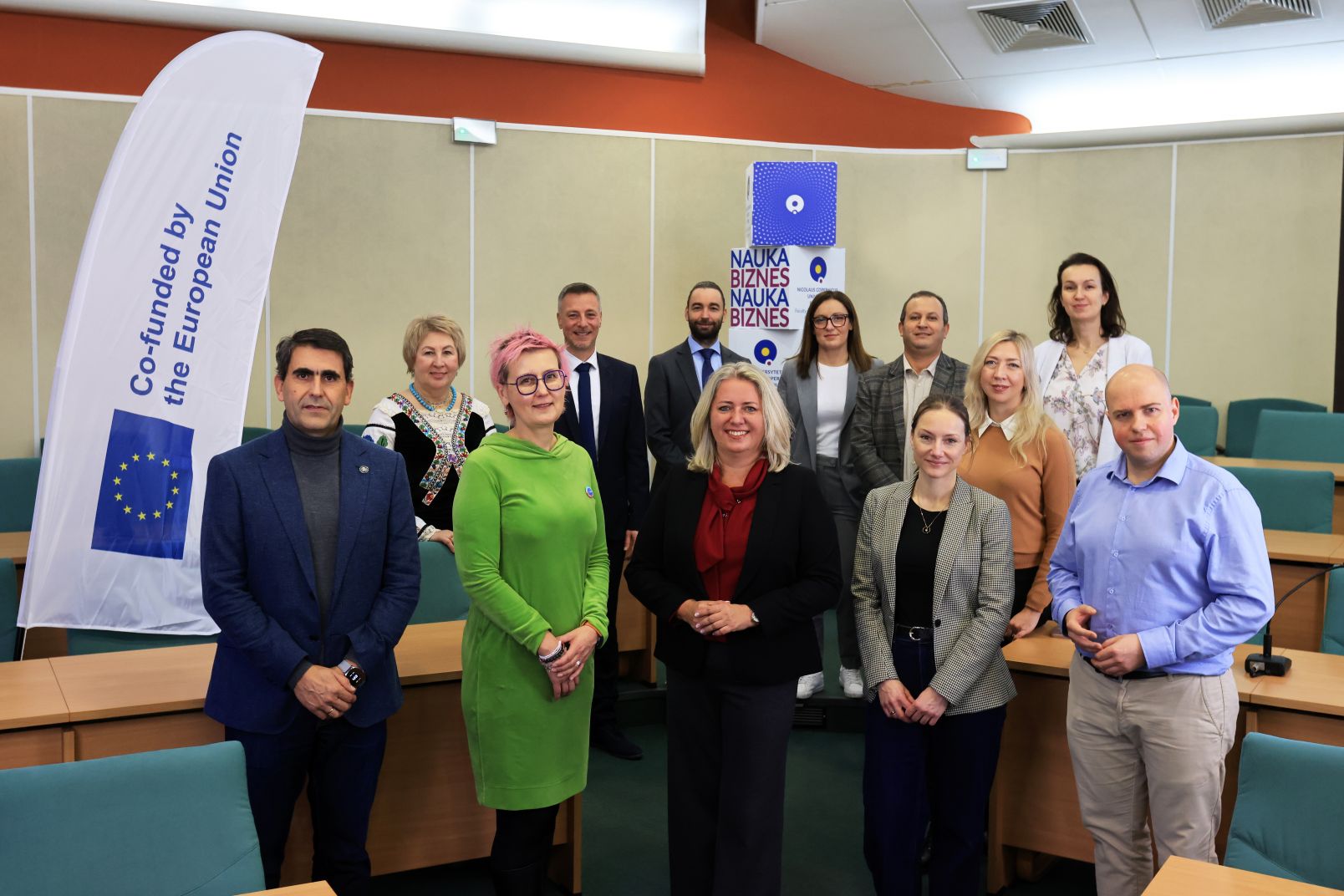
fot. Sławomir Kowalski
The interCultural Leadership In the Digital Era programme aims to meet the needs of students as future professionals in various environments related to managing dispersed, intercultural and international teams. Due to the ongoing digital transformation of organisations, there is a growing demand for specialists with the digital and leadership skills necessary to manage complex teams. The programme aims to strengthen students' international experience in leadership and e-skills and increase their employability through a compulsory internship policy.
Although the first participants in the programme will not arrive atNCU until next year, intensive work is already underway to establish the programme and finalise the details of the admission requirements.
This is another project implemented at the Faculty of Economics and Management concerning international joint education, says Dr Mateusz Tomanek, programme coordinator. "We already have some experience in this area, and the European Commission has recognised our efforts and contribution to the implementation of a partnership that extends beyond the borders of the European Union. In their assessment of the project, the reviewers noted that one of its strengths was the preparation of the application in the area of EQAR (European Quality Assurance Register) assurance.
The project is co-financed by the European Union and will end in 2031. However, the consortium may seek additional support in subsequent years.